
DevSecOps & Pipeline Security
Security controls in the path you already ship on — SCA, SAST, image and IaC scans, secrets — with a triage that developers will not mute.
Talk to an expert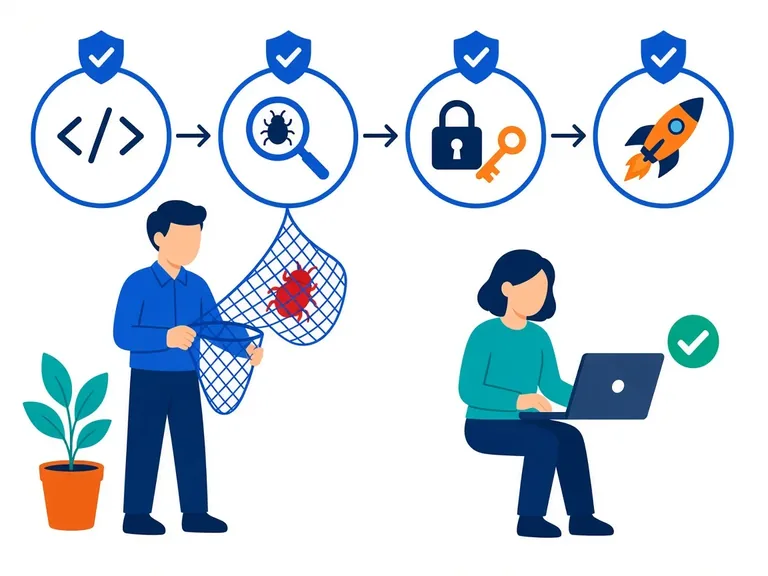
The offering
What we actually deliver
Pipeline security fails when every scanner is on and nobody triages. We put a small set of controls on the merge and release path: dependency scanning, static analysis where it pays, image and IaC checks, secret detection, and signed artefacts if you need them for customers. Each control has an owner and a severity policy so a noise finding cannot block a hotfix forever — or silently pass.
We wire results into the tools developers already open (PR checks, ticketing). Exceptions are time-bound. Criticals on production paths are not optional. Supply chain basics — lockfiles, pinned actions, registry provenance — are included because that is where many incidents start.
This is not a replacement for a security programme. It is the engineering slice: the pipeline does not ship known-bad by default. Threat modelling and pentest can sit beside it; we will not pretend a scanner is a pentest.
You get working gates, a documented exception process, and a backlog of the first real findings worth fixing. Developer time is treated as scarce. Scanners that cannot earn their keep are removed. We also pin CI actions and registry sources so a compromised third-party step cannot silently become your production supply chain, and so security questionnaires have an answer that matches the pipeline.
What you get
How we work
A delivery path you can follow
Each engagement is sequenced so architecture, cutover, and handover are visible — not a black box at the end.
Talk to us about DevSecOps & Pipeline Security
Share the current estate, deadline, and constraints — we will tell you what a first engagement should contain.