
API & Backend Development
HTTP APIs, jobs, and data stores designed for the clients you have — with auth, versioning, and observability baked in.
Talk to an expert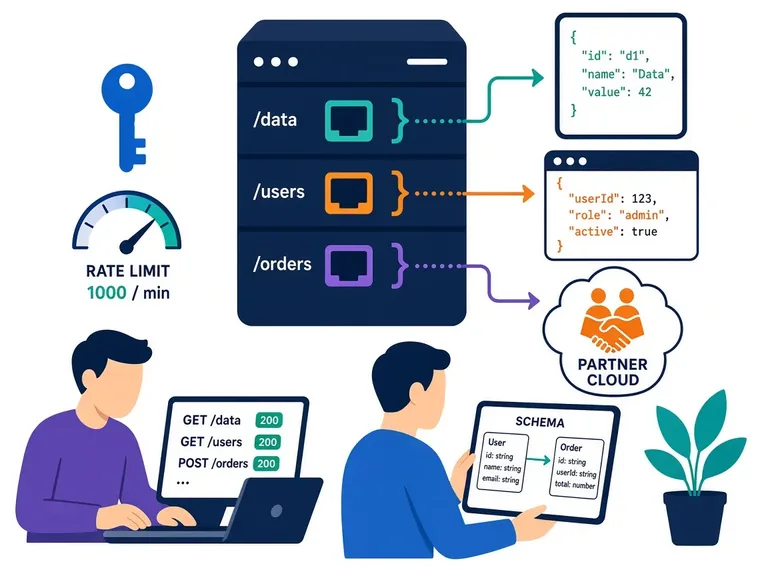
The offering
What we actually deliver
Backends are where product promises become data. We design APIs around use cases, not around database tables dumped over HTTP. Authentication matches your identity provider. Authorisation is explicit per resource. Breaking changes are versioned. Idempotency and pagination are decided before the first public client ships.
The runtime is usually containerised in your cloud, with migrations, background jobs, and a story for secrets. We pick PostgreSQL or the store you already run unless there is a reason not to. Eventing is added when a second consumer exists, not because a whiteboard said 'event-driven'.
Contracts are documented (OpenAPI or equivalent) and tested. Load and failure modes for the hot paths are considered — timeouts, retries from mobile, poison messages. Logging and tracing are correlated with the frontend or partner that calls you.
You get a service your web, mobile, or partner teams can build against, with a pipeline and a runbook. This offering pairs naturally with web, mobile, and platform engineering; it also stands alone when you already have clients. Rate limits, pagination, and error shapes are part of the public contract so a mobile retry does not create duplicate orders, and so the next consumer does not have to reverse-engineer production traffic.
What you get
How we work
A delivery path you can follow
Each engagement is sequenced so architecture, cutover, and handover are visible — not a black box at the end.
Talk to us about API & Backend Development
Share the current estate, deadline, and constraints — we will tell you what a first engagement should contain.