
AI + Process Automation
Put models inside existing workflows — classify, extract, route — so the process still has an owner when the model is unsure.
Talk to an expert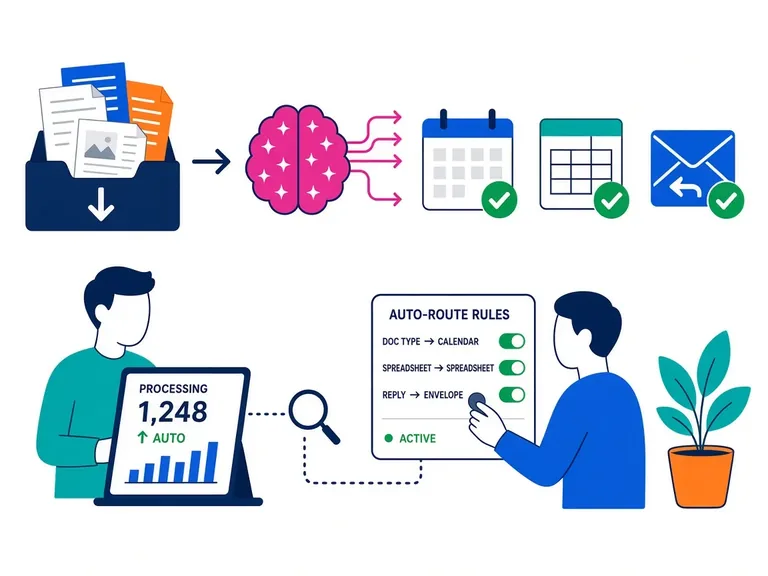
The offering
What we actually deliver
AI in a process is not a chatbot on the side. It is a step: classify the ticket, extract the fields, suggest the next queue, draft the reply. We place that step in the workflow you already run (ITSM, ERP, custom) with a confidence threshold and a human queue. The process owner still owns the SLA; the model is a specialist, not the manager.
Training or prompt design uses real historical cases, with PII handling agreed first. We measure precision and recall on the classes that hurt — not an average that hides the expensive miss. High-risk classes always go to a person. The workflow engine records both the model suggestion and the human decision so you can audit and improve.
Integration is dull on purpose: APIs, queues, retries. A model that cannot be reached must not stall the whole process; we define a degraded path. Cost per case is tracked so a clever classifier does not become a surprise bill.
You get a live process with an AI step, dashboards for exception rate, and a retraining or prompt-update cadence. If the model does not beat the current heuristic, we keep the heuristic. Tools should earn the step. Cost per case, lag when the model is slow, and the mix of human overrides are reviewed with the process owner so the step is retired if it stops paying for itself.
What you get
How we work
A delivery path you can follow
Each engagement is sequenced so architecture, cutover, and handover are visible — not a black box at the end.
Talk to us about AI + Process Automation
Share the current estate, deadline, and constraints — we will tell you what a first engagement should contain.